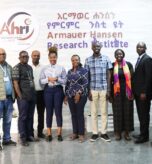



By Belayneh Endalemaw (DSWB PhD Fellow) with contributions from Meseret Mamunye (Armauer Hansen Research Institute (AHRI))
In today’s increasingly data-driven world, the challenge is not in collecting information but transforming it into meaningful impact, a vision central to the Data Science without Borders (DSWB) initiative. DSWB aims to improve how health data is collected, managed, and analyzed across Africa, supporting institutions in maximizing the full potential of their information to improve care and policy. This mission deeply resonates with my PhD research as a DSWB fellow, where I focus on advancing data-driven and AI-enhanced approaches for health systems strengthening.
My journey began with a simple but profound realization: Ethiopia generates a vast amount of health data across cancer centers, antiretroviral therapy (ART) clinics, Tuberculosis (TB) units, maternal health programs, and community health systems, but much of it remains underutilized. Different health centers, hospitals, and various regional clinics routinely collect rich longitudinal HIV data, yet these records often remain stored in archives and databases without being fully translated into insights that could transform patient care.
Ethiopia continues to experience a significant HIV burden, with tens of thousands of patients receiving lifelong antiretroviral therapy (ART). Clinics must manage frequent viral load monitoring, track treatment adherence, anticipate drug resistance, and decide when to switch regimens. However, clinicians often make these decisions with incomplete information or without tools that highlight early warning signals. This gap, the lack of predictive, explainable, and data-driven tools to support HIV clinical decision-making in Ethiopia, is what my research aims to address. Building on Ethiopia’s longitudinal HIV treatment data, my work explores how Artificial Intelligence (AI) can be utilized to: Predict viral load outcomes over time, identify key determinants of treatment failure, and group patients based on historical patterns, simulate care plans before clinicians make high-stakes decisions, and develop a dashboard to track and monitor HIV patients.
By applying advanced AI techniques to patient-level longitudinal data, I aim to develop predictive algorithms that support faster, more informed, and more personalized decisions for HIV care.
At several ART clinics in Ethiopia, clinicians often describe similar challenges:
- A patient with a stable viral load for years suddenly rebounds with no clear explanation.
- Patients with repeated missed appointments cannot be prioritized early enough due to the workload.
- Clinicians must decide whether to switch regimens without tools that project how a patient might respond.
- Clinicians give regimens for patients in different lines randomly, and this way may expose patients to risk.
These real scenarios illustrate the need for AI-enhanced decision support grounded in Ethiopia’s realities.
Prediction alone is not enough. My goal is to ensure these models are explainable and transparent, identifying why certain patients respond differently to treatments or what factors drive poor outcomes. Explainable AI is essential for building trust among healthcare providers and for generating actionable insights into the complex clinical, behavioral, and social factors that influence ART success. My research also integrates clustering and patient segmentation to identify groups with similar treatment trajectories. This empowers healthcare teams to triage high-risk patients, tailor interventions, and allocate resources more efficiently.
A particularly forward-looking component of my work involves digital twin simulations, virtual patient models that allow clinicians to explore different treatment paths before implementing them in real life. For Ethiopia’s high-volume ART clinics, this approach could dramatically improve personalized treatment planning and reduce uncertainty for patients by recommending appropriate regimens.
The broader aim is to integrate these innovations into a unified clinical decision-support platform for Ethiopia, one that brings together predictive analytics, explainability, patient clustering, and digital simulation. Such a platform could eventually evolve into a core tool for health facilities, enhancing care quality, strengthening policies, and reducing preventable treatment failures.
Although HIV is the initial focus, given Ethiopia’s rich ART data ecosystem and pressing clinical challenges, the methods and platform can later scale to other chronic diseases such as diabetes, hypertension, and TB. These conditions similarly require long-term monitoring, risk stratification, and personalized interventions, making the HIV use case a critical foundation for broader health system transformation.
The DSWB project embodies a powerful philosophy: data science should be open, collaborative, and accessible, empowering researchers, clinicians, and policymakers to leverage evidence for better health outcomes in the DSWB consortium’s four African partner countries: Kenya, Ethiopia, Senegal, and Cameroon. As a PhD fellow working in Ethiopia, I see my work not only as an academic endeavor but as part of a national initiative to transform health data into meaningful action.
DSWB envisions a future where every clinic in these countries becomes a learning health system, where each patient’s information contributes to decision-making, smarter care, stronger policy, and more compassionate treatment. To me, this is the promise of data science: to bridge the gap between technology and humanity, to connect evidence with empathy, and to ensure that Ethiopia’s health data truly works for Ethiopia. This mission is directly reflected in my research, which aims to ensure that every data point in Ethiopia becomes a tool for saving lives.